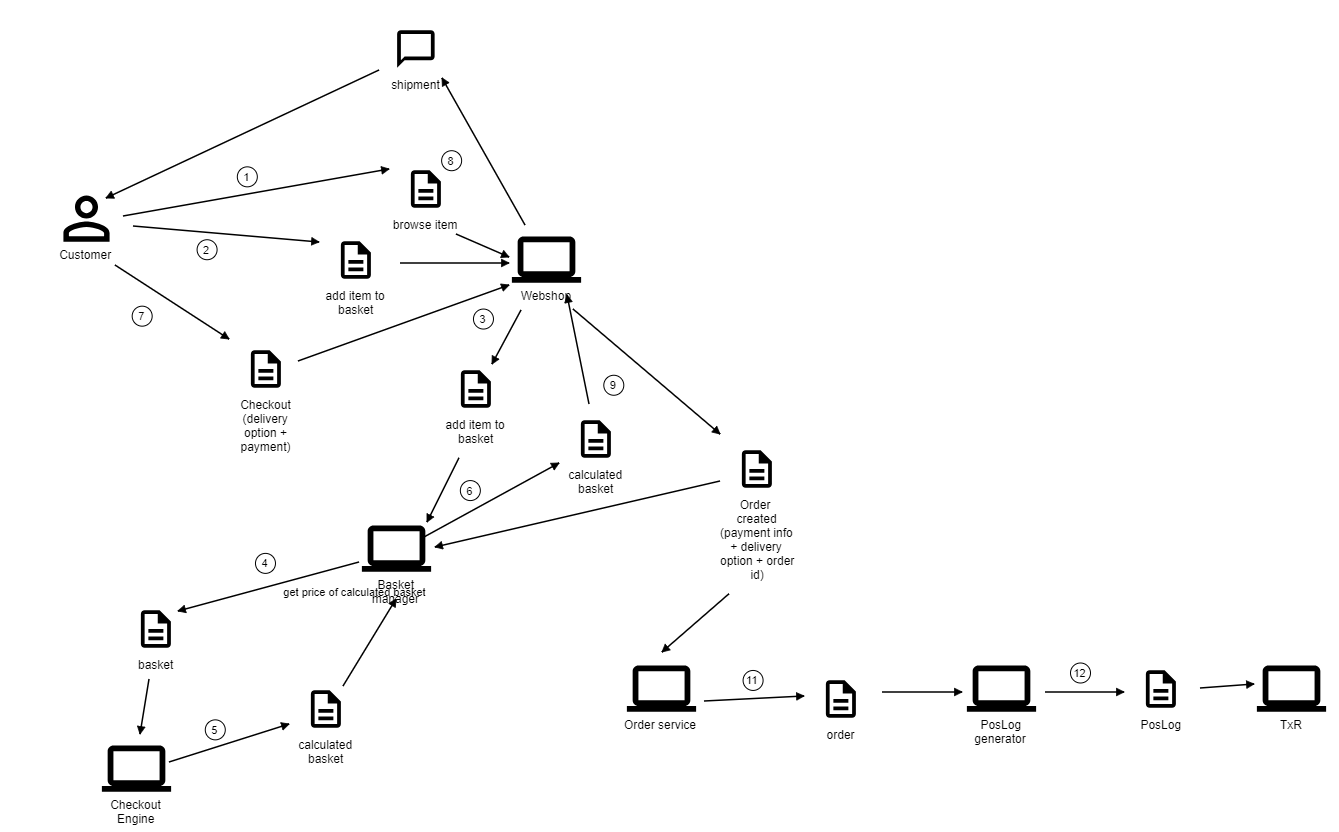
Online order - home delivery
A customer orders on the webshop, pays online and has the goods delivered from the warehouse. No store and no till are involved, so the step that makes the purchase returnable in a shop is the receipt that Customer Order writes itself.

- The customer orders on the webshop and pays online. The webshop builds the basket in Unified Basket Manager, which prices it.
- Checkout creates the customer order. Unified Basket Manager sends it to Customer Order, and the order owner's OMS is told about the new order, with the order number Hii Retail assigned.
- The warehouse ships the goods. The OMS or warehouse system owns this fulfillment; no store can act on it. When the parcel has gone, the OMS reports the fulfillment as fulfilled.
- Customer Order generates the receipt. No till ever saw the sale, so Customer Order writes the receipt for the shipment, once.
- The customer can return the goods in any store. A colleague finds the purchase the same way as any till sale.
See where the data comes from for what the OMS has to send for the receipt to be written.
The full message flow
The numbered diagram below shows every message between the systems involved.